Key Takeaways
- Heritage Protection: Victorian pine floorboards demand specialist handling to prevent tannin pull and aggressive grain raising.
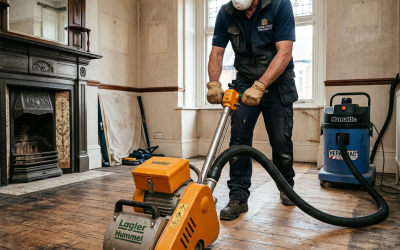
- Dust-Free Sanding: Modern floor sanding Tottenham relies on 99% dust-free extraction systems like Bona and Lagler Hummel.
- Correct Grit Sequencing: Uneven period boards often require starting with a 40-grit Zirconia abrasive.
- Bespoke Finishes: Navigating water-based vs hardwax oil finishes depends heavily on the timber’s moisture content.
The Unique Challenge of Victorian Pine Floorboards in Tottenham
Restoring period domestic properties across Tottenham presents unique challenges. The original Victorian pine floorboards have often spent decades hidden beneath heavy carpets, suffocated by thick, impermeable bitumen, or layered with dark, lead-based paints. When homeowners finally decide to reveal these historic timbers, they are often confronted with cupped, damaged, and uneven surfaces.
This is the quintessential problem of heritage restoration. You want to breathe new life into your property’s original features, but the sheer state of the timber makes it seem impossible. Historic wood has its own character, shaped by fluctuating UK humidity levels, structural settling, and generations of foot traffic. Simply hiring a drum sander from a local tool shop and attacking the floor is a recipe for disaster.
Why DIY Floor Sanding Ruins Heritage Wood (The Agitation)
The agitation sets in when well-meaning homeowners or inexperienced tradesmen attempt to tackle these floors without the correct knowledge. Standard hire machines are notorious for leaving aggressive ‘chatter marks’ across the floorboards. Furthermore, older pine is highly susceptible to tannin pull—a chemical reaction where the natural tannins in the wood bleed through water-based lacquers, leaving unsightly yellow or brown stains.
Beyond the aesthetic risks, there is the issue of dust. Traditional sanding methods release huge volumes of toxic, microscopic dust particles into the air. This dust infiltrates every crevice of your home, settling on furniture and lingering in the air for weeks. Moreover, if the tradesmen fail to check the moisture content of the wood, the application of new finishes can fail entirely. If you apply a finish to wood that is too damp, the grain raising will be severe, leaving a rough, unprofessional surface that requires the entire process to be repeated.
The Professional Solution: Advanced Dust-Free Sanding
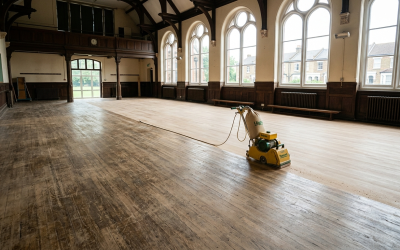
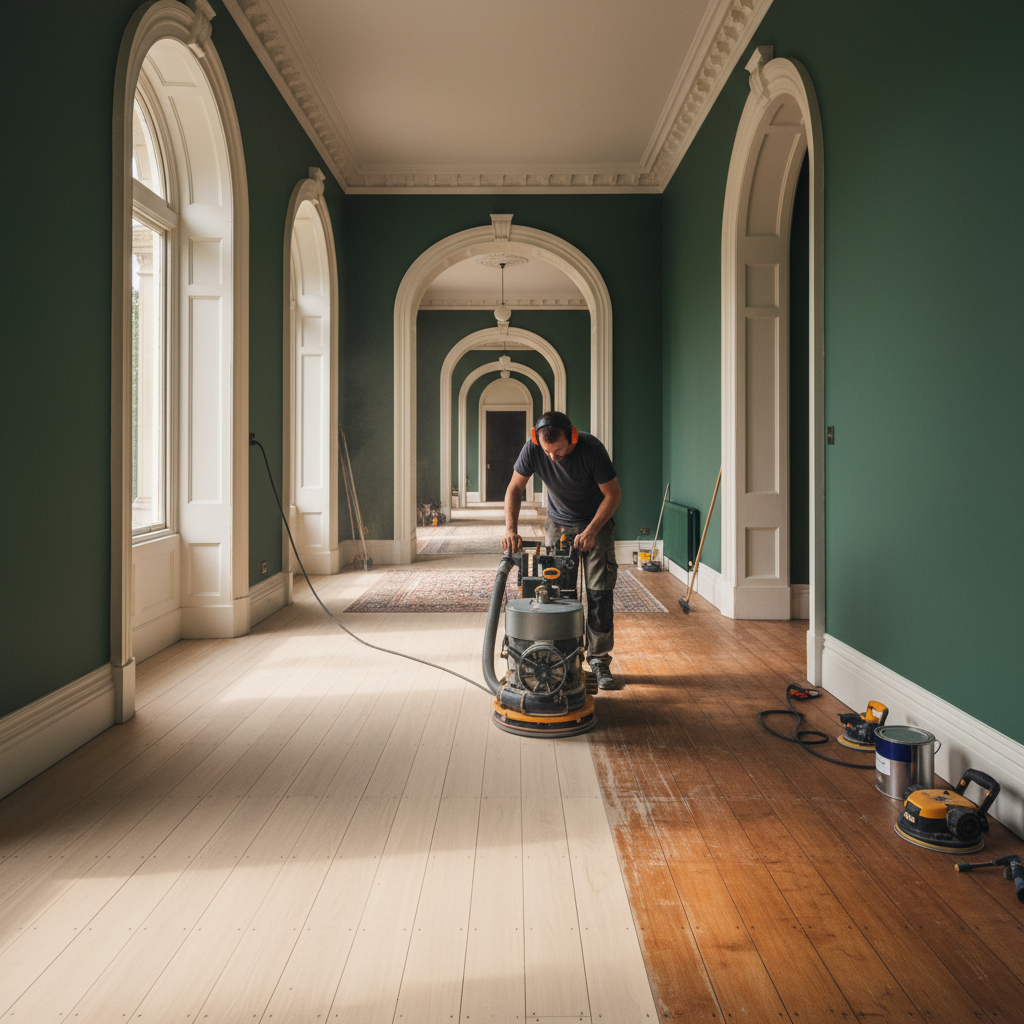
The solution lies in employing a meticulous, professional restoration process using state-of-the-art machinery and premium finishes. For Victorian pine, our protocol strictly dictates the use of advanced dust-free sanding technology. Machines like the Lagler Hummel and the Frank Spider, paired with Bona Vacuum Dust Extractors, capture 99.9% of dust at the source.
Pro-Tip: The Perfect Grit Sequence
When dealing with heavily cupped or uneven Victorian pine floorboards, standard grit sequences won’t suffice. Pro-Tip: We typically commence the restorative process using a 40-grit Zirconia abrasive on a belt sander, running at a 15-degree angle to the grain. This diagonal pass flattens the boards without excessively gouging the softer spring wood. Once the floor is entirely flat, we move meticulously through the grits—60, 80, and finally 120-grit—ensuring every scratch from the previous pass is completely eradicated.
Managing Moisture Content and Grain Raising
Before any finish is applied, understanding the timber’s moisture content is paramount. UK humidity can fluctuate wildly, affecting how the wood behaves. If a client desires a deeply stained finish, we may utilize a technique called water popping. This involves intentionally wetting the floorboards to open the wood pores, allowing the stain to penetrate deeper and more evenly. However, water popping induces grain raising, meaning the floor must be lightly denibbed (using a rotary buffer with a fine mesh screen) before the final protective coats are applied.
Choosing the Right Finish: Water-Based vs Hardwax Oil
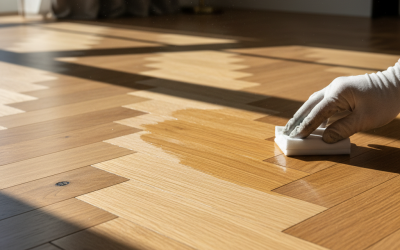
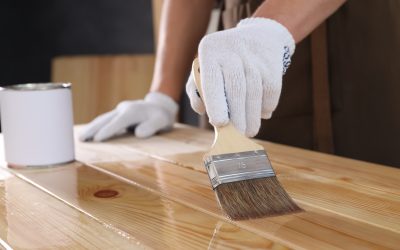
When restoring heritage timber, the debate between water-based vs hardwax oil is ongoing. For high-traffic hallways, a commercial-grade polyurethane lacquer like Bona Traffic HD offers unparalleled durability. However, to maintain the authentic, warm aesthetic of Victorian pine, many clients prefer Osmo Hardwax Oil. This penetrating oil enriches the wood’s natural patina and allows for localized spot repairs—a huge advantage for busy domestic settings.
We always recommend proper aftercare. Using harsh supermarket detergents will strip the protective oils. Always use pH-neutral cleaners specifically formulated for your chosen finish. For more information on maintaining your newly restored floors, read our comprehensive guide on wood floor maintenance.
Conclusion: Trust the Specialists
Restoring your Victorian pine floorboards is an investment in your property’s heritage. Don’t risk DIY disasters or hire unspecialised tradesmen who lack an understanding of tannin pull, moisture content, and advanced grit sequencing. Whether it’s a grand Georgian dining room or a simple Victorian hallway, our dust-free restoration techniques ensure a flawless, enduring finish. Check out our services for commercial floor sanding if you also manage larger properties. Remember, professional floor restoration not only enhances aesthetic appeal but also significantly increases the value of your home.