Key Takeaways:
- UK indoor humidity should ideally stay between 40-60% to prevent timber contraction and expansion.
- Avoid ‘wet mopping’ at all costs; use a professional spray mop like the Bona Stone, Tile & Laminate or Wood Floor Spray Mop.
- Tannin pull can cause dark patches on oak floors if the wrong cleaning agents are used—always use pH-neutral cleaners.
- Kitchen worktops and high-moisture areas require a regular maintenance coat of Osmo TopOil every 6-12 months.
The ‘Slow Death’ of a Beautiful Floor
You have just invested thousands of pounds in a professional wood floor restoration. The boards look stunning, the finish is silky, and the room is transformed. However, within six months, you notice fine scratches in the hallway, or perhaps a dull patch where the kitchen sink is located. Most homeowners treat their timber floors like tiles, using generic supermarket cleaners and saturated mops. This is the fastest way to ruin a professional finish.
The Agitation: Why Water is Your Floor’s Worst Enemy
The UK’s climate is notoriously damp. When you introduce excessive water to floorboards, you trigger grain raising. This is where the wood fibres swell and stand up, creating a rough texture that traps more dirt and eventually breaks through the lacquer or oil. Furthermore, on oak floors, moisture can trigger tannin pull, where the natural acids in the wood react with the water to create permanent, unsightly dark stains. Without a strict maintenance regime, your ‘lifetime’ floor will need a full sand and refinish within five years.
The Solution: The Professional Maintenance Framework
Maintaining a floor is significantly cheaper than restoring one. By following the same protocols used by high-end tradesmen, you can keep your floors looking pristine for decades.
Understanding Moisture Content and Humidity
Timber is a hygroscopic material—it breathes. In the winter, when British heating is on high, wood shrinks, often opening small gaps between the boards. In the humid summer, it expands. We recommend using a hygrometer to monitor your home’s humidity. If it drops below 30%, consider a humidifier to prevent your heritage restoration from developing structural cracks.
The pH-Neutral Cleaning Revolution
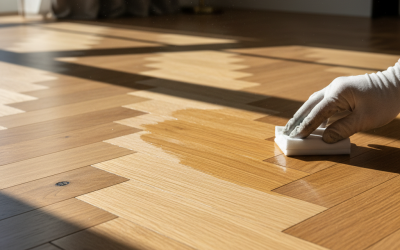
Stop using vinegar or ‘all-purpose’ cleaners. These are often acidic and will slowly eat away at Osmo Hardwax Oil or water-based lacquers. Instead, use a pH-neutral cleaner specifically formulated for wood. Products like Osmo Wash and Care not only clean but also replenish the natural oils in the timber, maintaining the protective barrier.
Kitchens and High-Traffic ‘Refresh’ Cycles
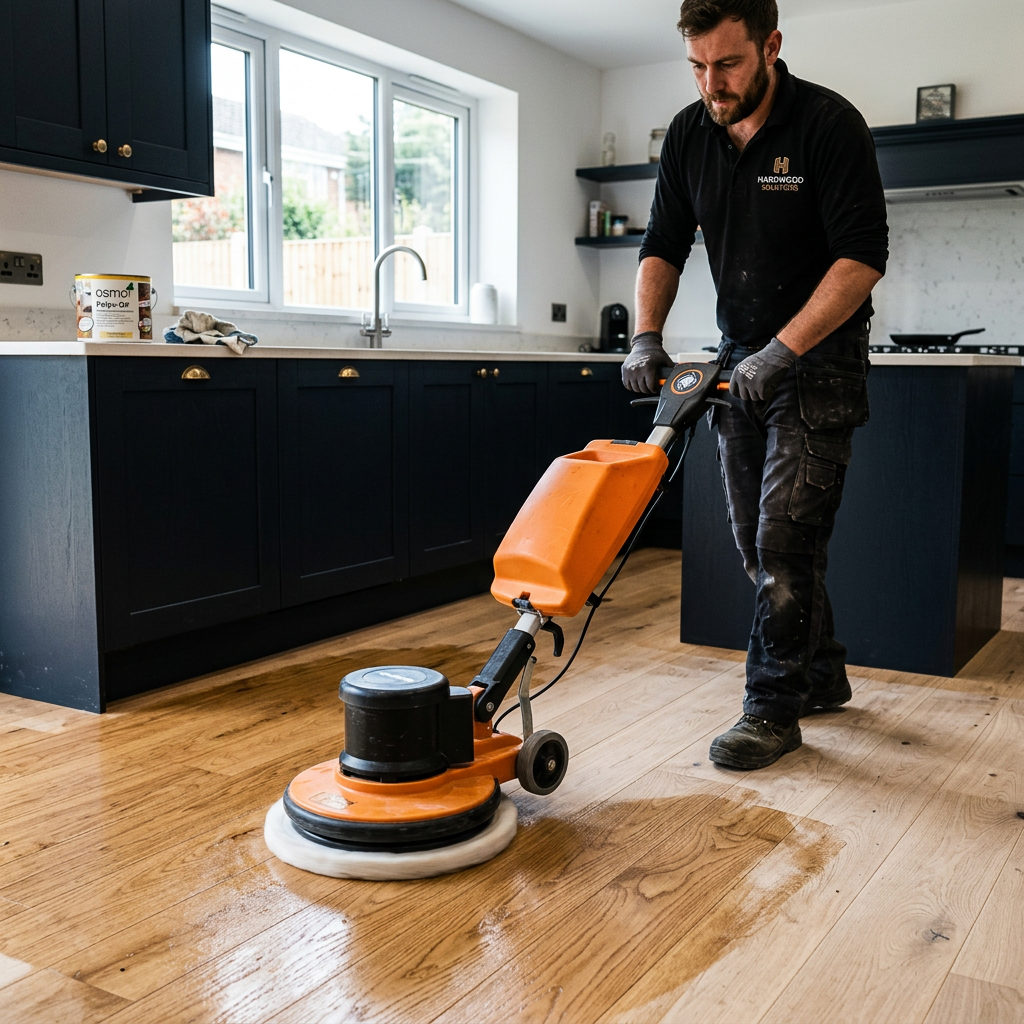
Kitchen floors and kitchen worktops endure the most punishment. For these areas, we recommend a ‘Screen and Coat’ every 18-24 months. This involves a very light abrasion with a Bona Flexisand and a fine mesh disc, followed by a single fresh coat of lacquer or oil. This ‘tops up’ the wear layer before the wood itself is exposed, saving you the VAT and labor costs of a full sanding job in the future.
Keep your home looking its best with our floor sanding and refinishing expertise. We provide detailed aftercare guides with every project we complete.
For more specific advice, check out our articles on correct cleaning of oiled floors, refreshing worn kitchen surfaces, or residue-free cleaning.