A Step-by-Step Routine for a Residue-Free Result
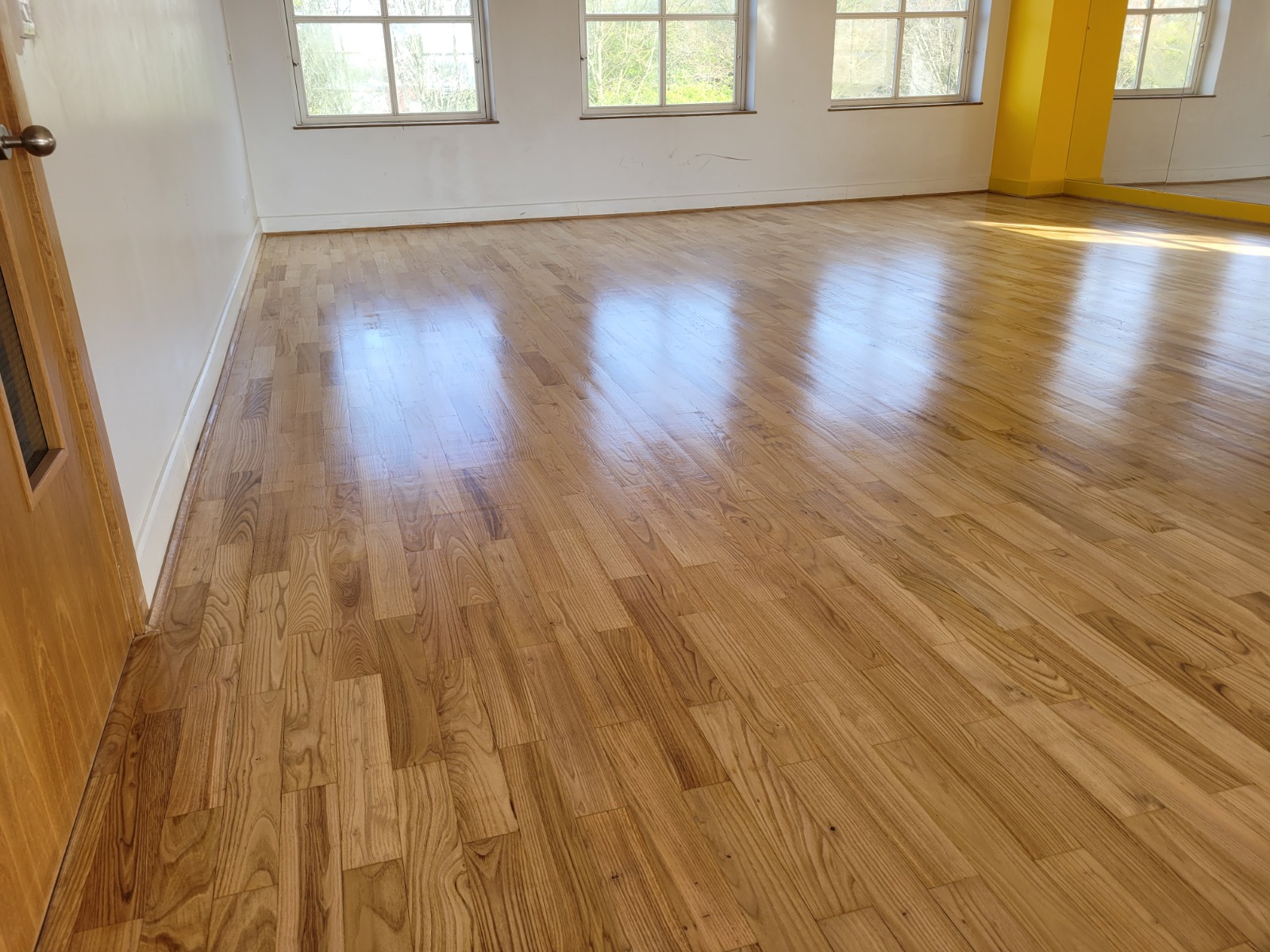
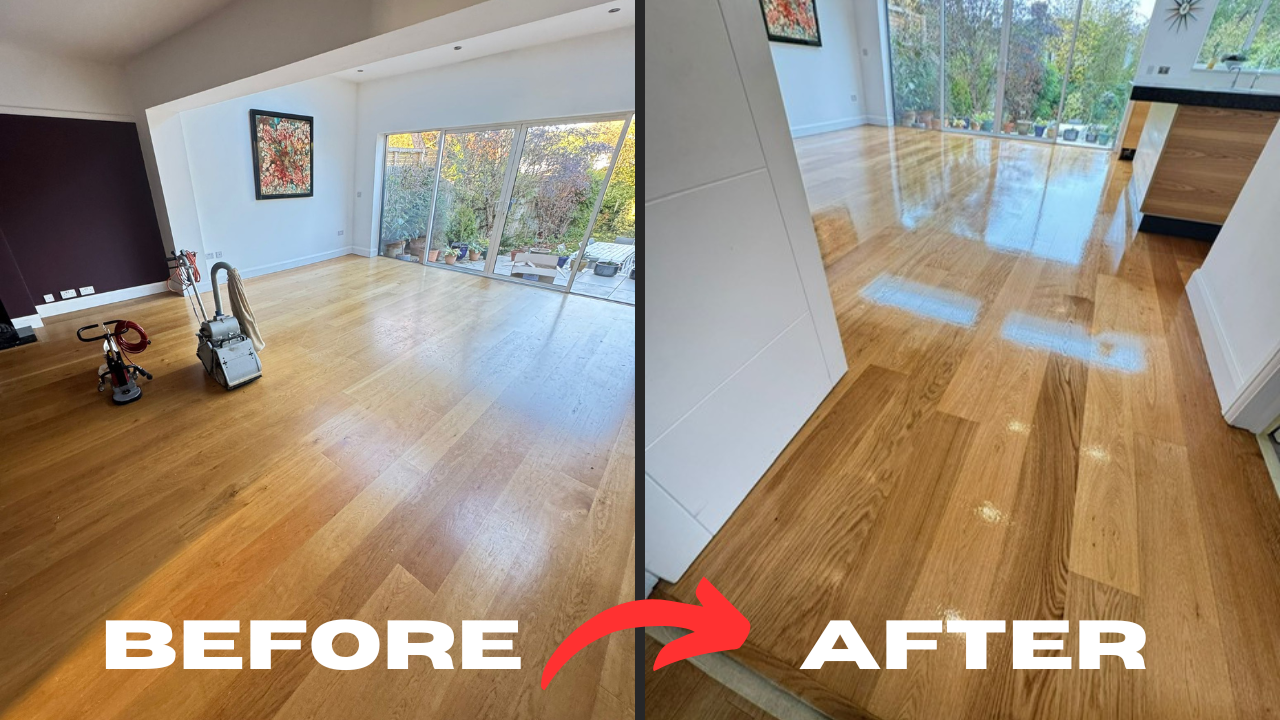
If you’ve ever mopped your beautifully sanded oak only to find a hazy veil staring back at you, you’ve met the enemy: residue. That greyish film dulls grain, exaggerates footprints, and makes even fresh floors look tired. This guide shows you how to get that crisp, light-catching, showroom sheen without sticky build-up—by choosing products that don’t leave a film, and by pairing the right method with the right finish. Consider it your practical blueprint to a floor that looks newly finished, week after week, without the smoke and mirrors of silicone gloss.
Why floors look cloudy (even when you “just cleaned”)
Cloudiness is usually chemistry, not dirt. Three culprits dominate:
- Surfactant residue
Many general-purpose cleaners contain surfactants that lift grime—but if they aren’t fully rinsed or if the cleaner is too concentrated, they dry as a whisper-thin film. Under light, that film becomes a visible haze. - Polymers and “shine enhancers”
Some off-the-shelf “floor shiners” add acrylics or silicones to fake gloss. They work… until they scuff, yellow, or stack into a patchy build-up that needs stripping. Worse, those layers can make future refinishing more complicated. - Mineral deposits
Hard water leaves calcium and magnesium salts that dry as a dull bloom, especially when mixed with soap. If your bucket looks milky after mopping, that’s your cue.
The solution isn’t to scrub harder; it’s to clean smarter—with products that genuinely clean and then disappear.
Match the cleaner to the finish (or you’ll chase your tail)
Before we name specific product types, identify your finish. Different topcoats behave differently:
- Hardwax oils and penetrating oils
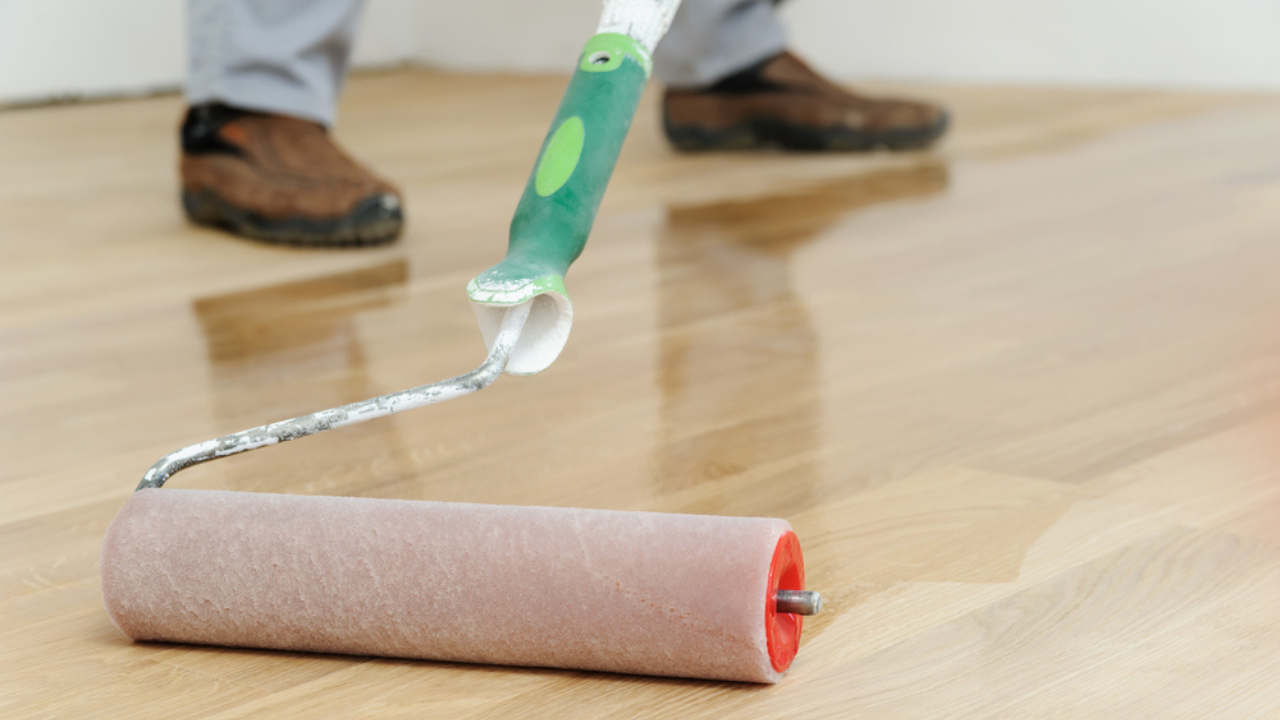
These finishes soak into the wood, often leaving a soft-sheen surface. They like pH-neutral, non-rinsing cleaners with mild soaps (think plant-based oils and sugar surfactants) that emulsify dirt without stripping protective oils. - Water-based polyurethane/lacquer
These form a hard, clear film. They’re best with pH-neutral or mildly alkaline cleaners that don’t contain “gloss enhancers.” Avoid anything that says “polish,” “refresh,” or “shine” unless you’re intentionally applying a maintenance coat. - Waxed floors
Old-school wax wants solvent-compatible cleaners designed for waxed wood, or a very lightly damp microfibre routine. Soap-heavy products can streak badly here.
If you’re unsure what you’ve got, look for clues: an oiled floor feels silky and matte; a lacquered floor feels glassy and more “sealed.” Still uncertain? A quick consult with a pro helps—and if your floor is ready for a deeper reset or finish upgrade, our team can help with Wood Floor Sanding, Oiling, Staining, Lacquering, Refinishing, Restoring, Repairing, Gap Filling, Deck Sanding, and Commercial Sanding.
The anatomy of a non-filming cleaner
When you read a label, look for these characteristics:
- pH-neutral (around 7) – Safe for most finishes, less likely to leave an alkaline film.
- Low-residue surfactants – “Non-ionic” surfactants and sugar-based cleaners often rinse cleaner than soap-rich formulas.
- No acrylic, silicone, or “polish” additives – Those create a temporary shine that becomes a permanent headache.
- Fast-evaporating carriers – Water with a small proportion of fast-flashing alcohols can help dry streak-free, especially on lacquered floors.
- Finish-specific assurance – Labels that explicitly state “compatible with water-based polyurethane” or “safe for oiled wood” aren’t just marketing; they reflect chemistry that won’t fight your topcoat.
A working rule: if the bottle promises to “gloss,” “polish,” “revive shine,” or “leave a protective layer,” it’s not a daily cleaner—it’s a coating. Save that for rare, intentional maintenance—if at all.
Microfibre matters more than you think
Even with the best solution, the wrong cloth will smear. Choose:
- Split-fibre microfibre for day-to-day dusting: it picks up particles electrostatically instead of pushing them around.
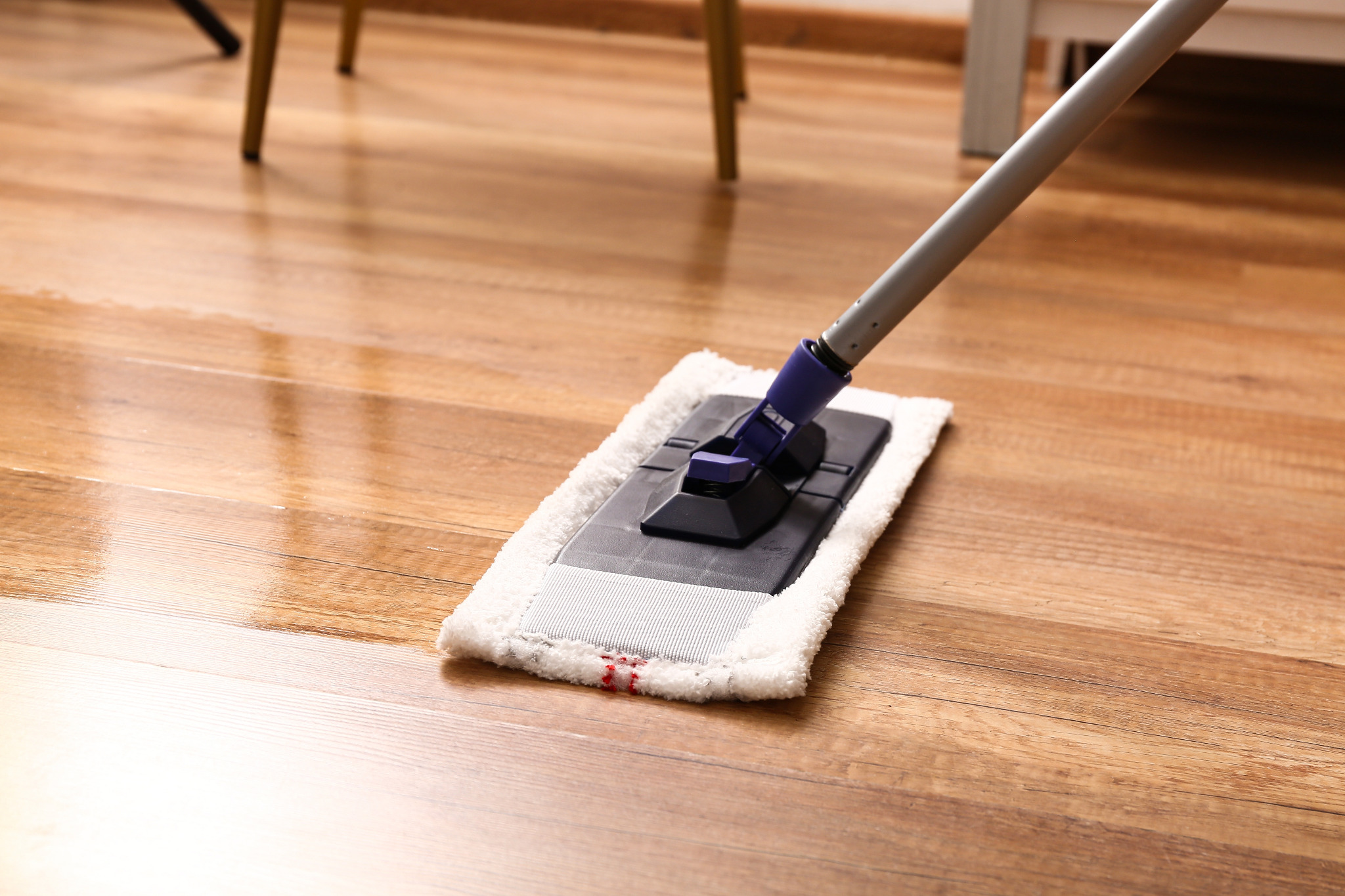
- Flat microfibre mop pads for damp cleaning: they apply solution thinly and evenly, then lift it back off the floor.
- Two-bucket method for deeper cleans: one bucket with diluted cleaner, one with plain water to rinse your mop. The rinse bucket keeps dirt and surfactant out of your cleaning pass, reducing film.
Avoid sponge mops (they overload the floor with water) and cotton string mops (they shed lint and leave streaks).
Dilution discipline: the quiet secret to a film-free shine
Most residues happen because the cleaner was too strong. Always measure. If the label says 50 ml in 5 litres, it really does mean 50 ml—not “a generous slosh.” Too much surfactant not only leaves a film but can soften certain finishes temporarily, making them mark more easily.
Hard water? Add a splash of de-ionised water to your dilution or use a simple inline jug filter. It’s a low-effort way to stop mineral haze before it begins.
The routine that achieves a lasting, natural look
Use this floor-care cadence to keep things crystal:
- Daily (or as needed): dry dust
A wide microfibre dust mop beats the hoover on hard floors, capturing grit that would otherwise act like sandpaper under shoes. - Weekly: damp clean
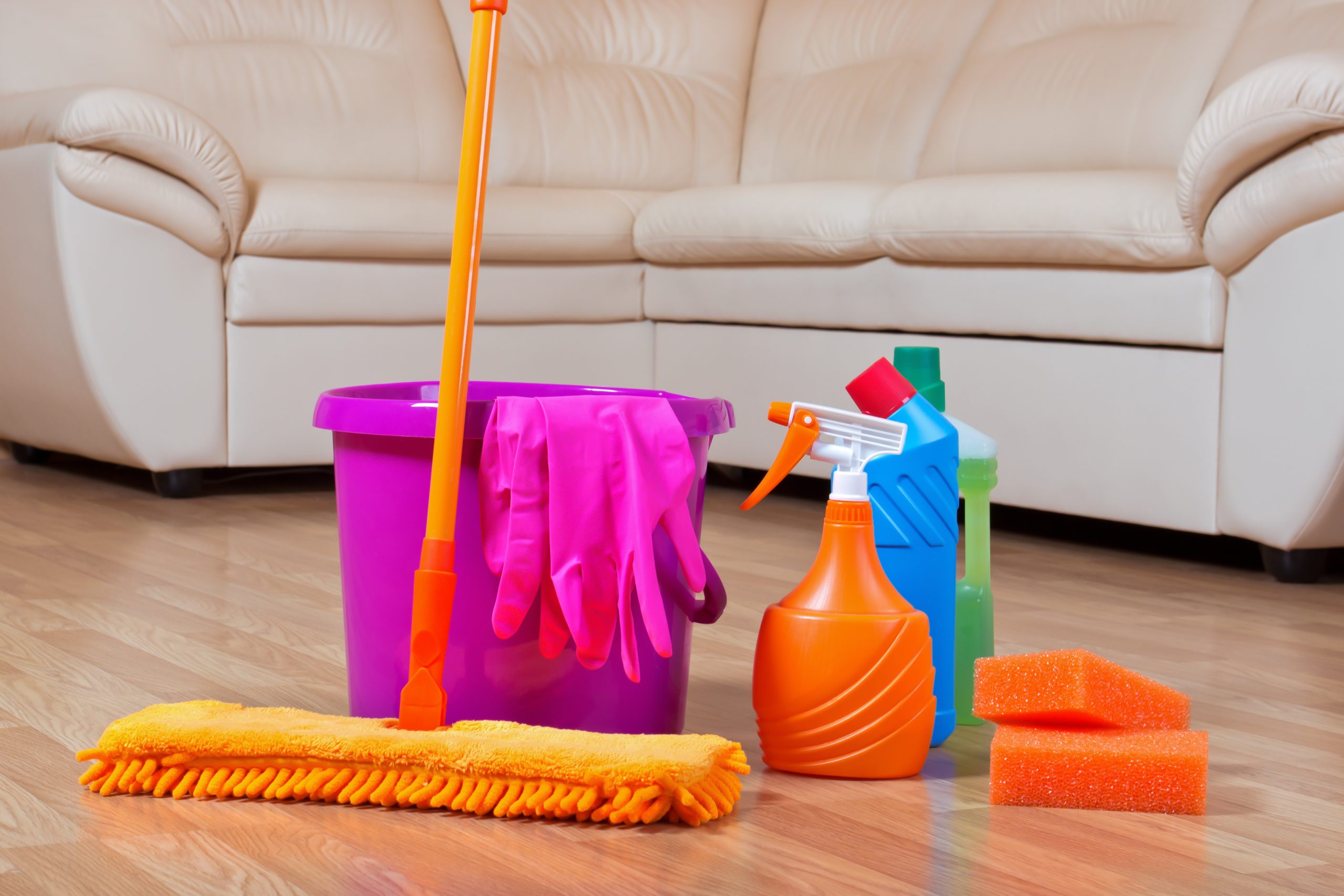
Lightly mist a pH-neutral, non-filming cleaner onto a microfibre pad (or use a ready-to-use spray) and work in with-the-grain passes. Flip or change pads as soon as they look grey. - Monthly: edge attention
Skirting boards and thresholds trap residue. Wipe edges with a barely damp cloth to prevent a tide-mark of grime from migrating inward. - Seasonally: maintenance check
For oiled floors, consider a manufacturer-approved care oil applied sparingly and buffed off bone-dry. For lacquered floors, inspect high-traffic lanes for micro-scratches; if they’re catching light, a professional screen and re-coat can restore clarity before wear reaches the wood. Ask about Refinishing or Restoring if you’re seeing persistent dullness.
Products that sound good but quietly cause trouble
- All-in-one “clean and polish” sprays
These are convenient but lay down acrylics that scuff and turn patchy. They also complicate later Sanding and Lacquering because those residues must be fully removed first. - Steam mops
Wood hates heat and moisture together. Steam drives vapour into joints and can cloud certain lacquers. It’s a fast track to lifted edges, white blush, or bond failure—especially on engineered floors. - Vinegar mixes
Yes, they cut grease; no, they’re not finish-friendly. Acids can etch or dull water-based polyurethane and degrade oiled surfaces over time. - Dish soap
Designed to cling to plates until rinsed under litres of water—not ideal for floors, where you apply minimal liquid. The result is streaks and sticky traffic lanes.
When your floor already has a film: the rescue plan
If you’re battling haze, follow a stepped approach:
- Rule out hard water first
Wipe a small test patch with a microfibre cloth dampened in de-ionised water. If the patch clears, minerals are to blame. Switch to filtered water for mopping. - Try a residue-cutting neutral cleaner
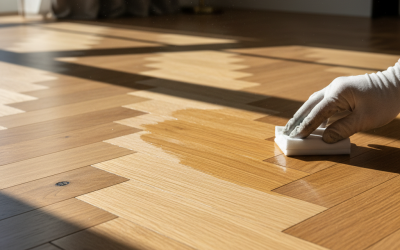
A pH-neutral cleaner with low-residue surfactants can “re-emulsify” yesterday’s film. Work in small areas, and dry buff immediately with a clean pad. - Use a finish-safe deep cleaner
Some brands offer “intensive cleaners” that strip organic residue without attacking lacquer or oil. Always spot-test. - Call in a professional
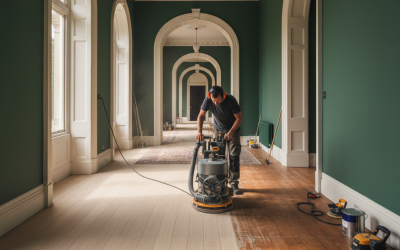
When acrylic polishes or silicone layers are entrenched, they often need a controlled, mechanical approach. A gentle screen and re-coat for lacquered floors or a light freshen and care-oil for oiled floors restores clarity. We handle that end-to-end through Refinishing, Restoring, and seamless Repairing where needed.
The “Show Home” Clean vs. real-world living
Here’s the paradox: the best daily cleaners for a natural, non-filmy look tend to be understated. They won’t shout “instant gloss,” and that’s the point. Real-world elegance is about clarity, not cosmetic varnish. The floors you admire in magazines aren’t necessarily shinier; they’re cleaner, evenly lit, and free from polymer build-up. Achieve that, and you’ll have what people call the look—without courting long-term problems.
To keep that clarity longer between maintenance cycles, consider a programme:
- Traffic zoning – Place breathable mats at entrances (no rubber-backed varieties on lacquered floors).
- Felt pads – Fit them to chairs and tables; grit stuck to chair feet is haze’s best friend.
- Shoe etiquette – Outdoor soles carry abrasive dust; a “shoes off indoors” habit extends finish life dramatically.
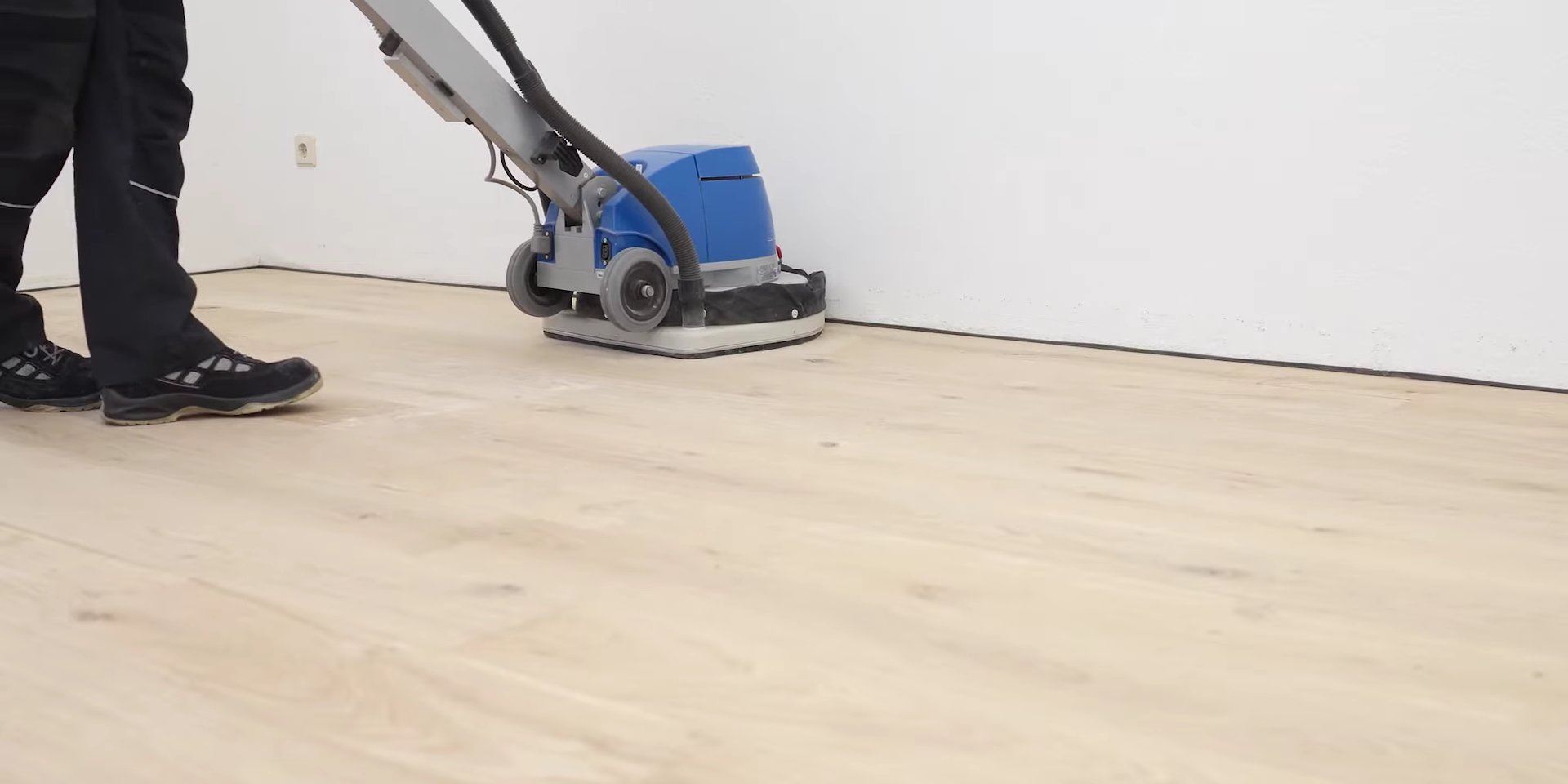
- Regular professional TLC – A quick, dust-controlled Wood Floor Sanding of micro-scratches, followed by Lacquering or Oiling to suit your aesthetic, resets the clock before issues escalate.
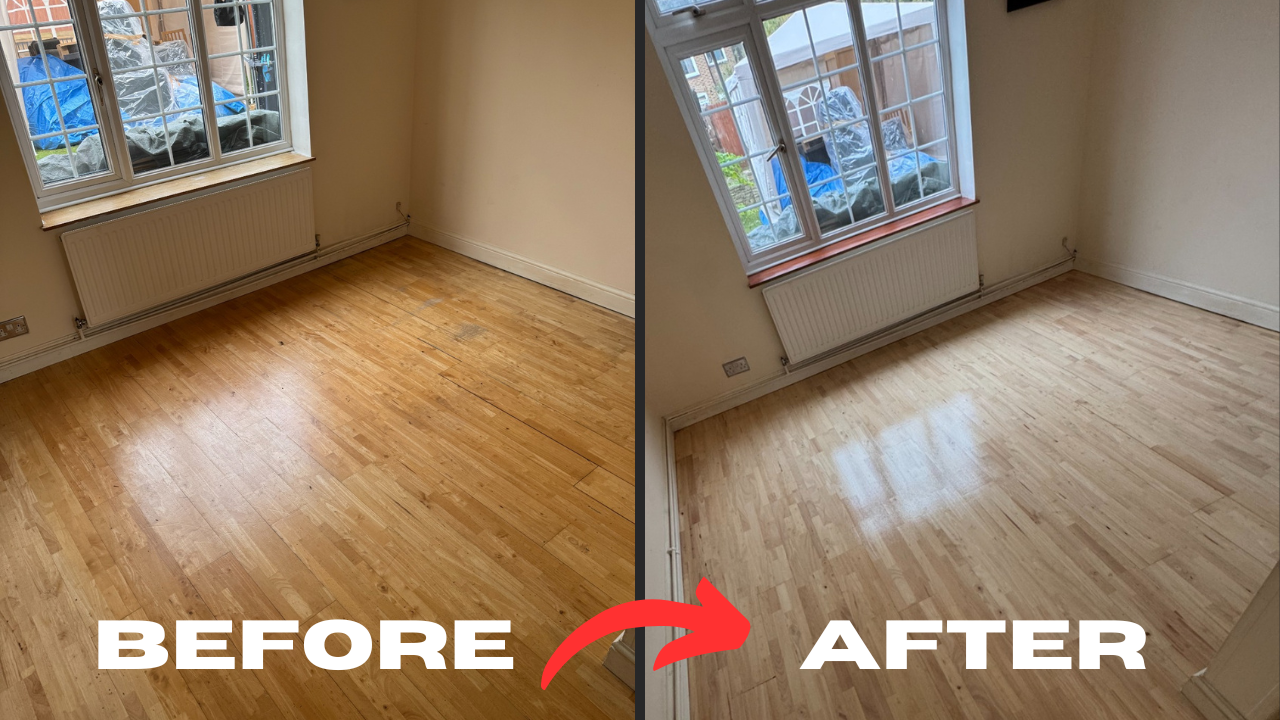
Oiled vs. lacquered: which stays clearer with less effort?
Both can look immaculate, but they age differently:
- Oiled floors develop a mellow, boutique-hotel character. Day-to-day cleaning is forgiving if you use the right neutral cleaner. Periodically, a care oil keeps pores nourished and masks micro-marks. If you love a matte, tactile feel and easy spot-repairs, oil is delightful.
- Lacquered floors deliver that cool, modern clarity that many people associate with new builds. They resist stains and water better but show micro-scratches under raking light sooner. A lightweight screen and re-coat restores that clarity fast. If you like low-maintenance sparkle, lacquer’s your friend.
Not sure which suits your space? We can sand a test area and show you both finishes side-by-side after Sanding, then complete the room when you’ve chosen. You can also combine a subtle Staining tone—honeyed, smoked, or Scandinavian pale—to harmonise with your décor.
Outdoors and commercial spaces: film-free at scale
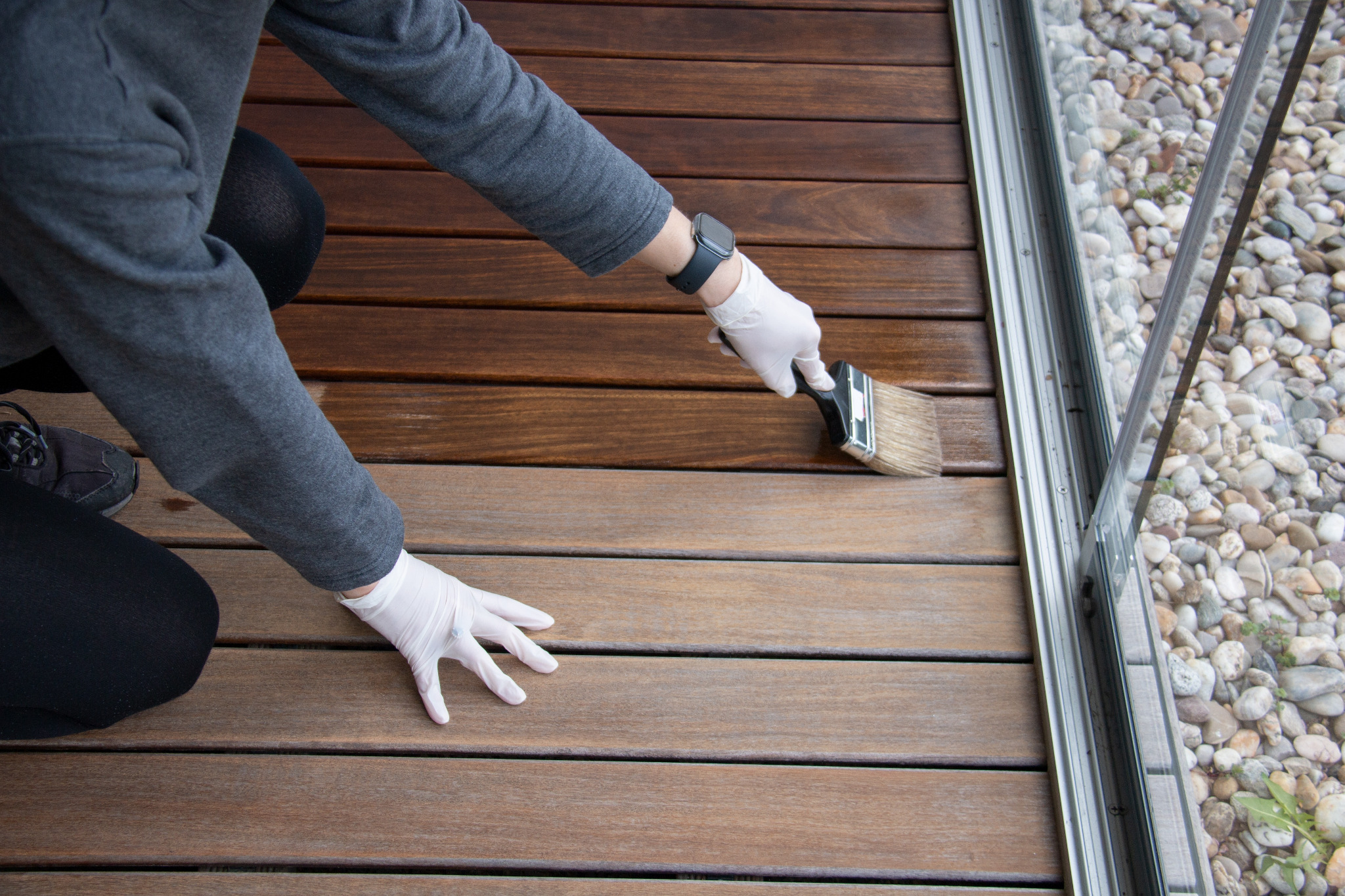
Decking gets its own rules: weathered greys, algae, and tannin bleed call for a different playbook. Films become slippery outdoors and look patchy as they weather. We recommend penetrating cleaners and breathable finishes that don’t skin over or peel. If boards are furred or silvered, a professional Deck Sanding followed by oiling provides that clean, bare-foot-ready grain without a plastic sheen.
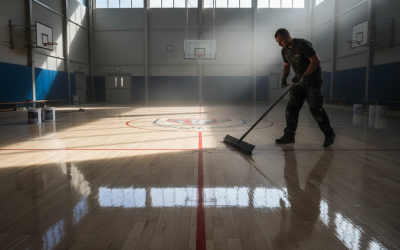
Commercial environments—restaurants, galleries, retail—face relentless traffic. Here, daily film-free cleaning is mission-critical because any residue reads as “unclean” under bright lighting. A service plan with scheduled auto-scrubber passes using neutral, non-filming solutions, plus periodic screen and re-coat to refresh lacquer, keeps presentation sharp and downtime minimal. Talk to us about tailored Commercial Sanding and ongoing care packages.
Buying guide: how to choose non-filming products quickly
When you’re in the aisle (or scrolling a product page), do this 30-second check:
- Scan for “pH neutral” – If it’s not stated, assume it’s not.
- Avoid “polish,” “gloss,” “reviver,” “protective layer” – those belong to maintenance coatings, not cleaners.
- Look for finish naming – “Suitable for oiled wood” or “safe for polyurethane/lacquer.”
- Confirm dilution – Clear instructions suggest a purpose-made cleaner, not a generic detergent.
- Check the safety sheet – When in doubt, the SDS (safety data sheet) shows whether acrylic/silicone polymers are present.
Pro tip: Buy concentrate + refillable spray. You’ll use the right dilution every time, cutting residue and saving money.
A simple, film-free cleaning recipe
When you need a safe, reliable routine between professional visits, try this:
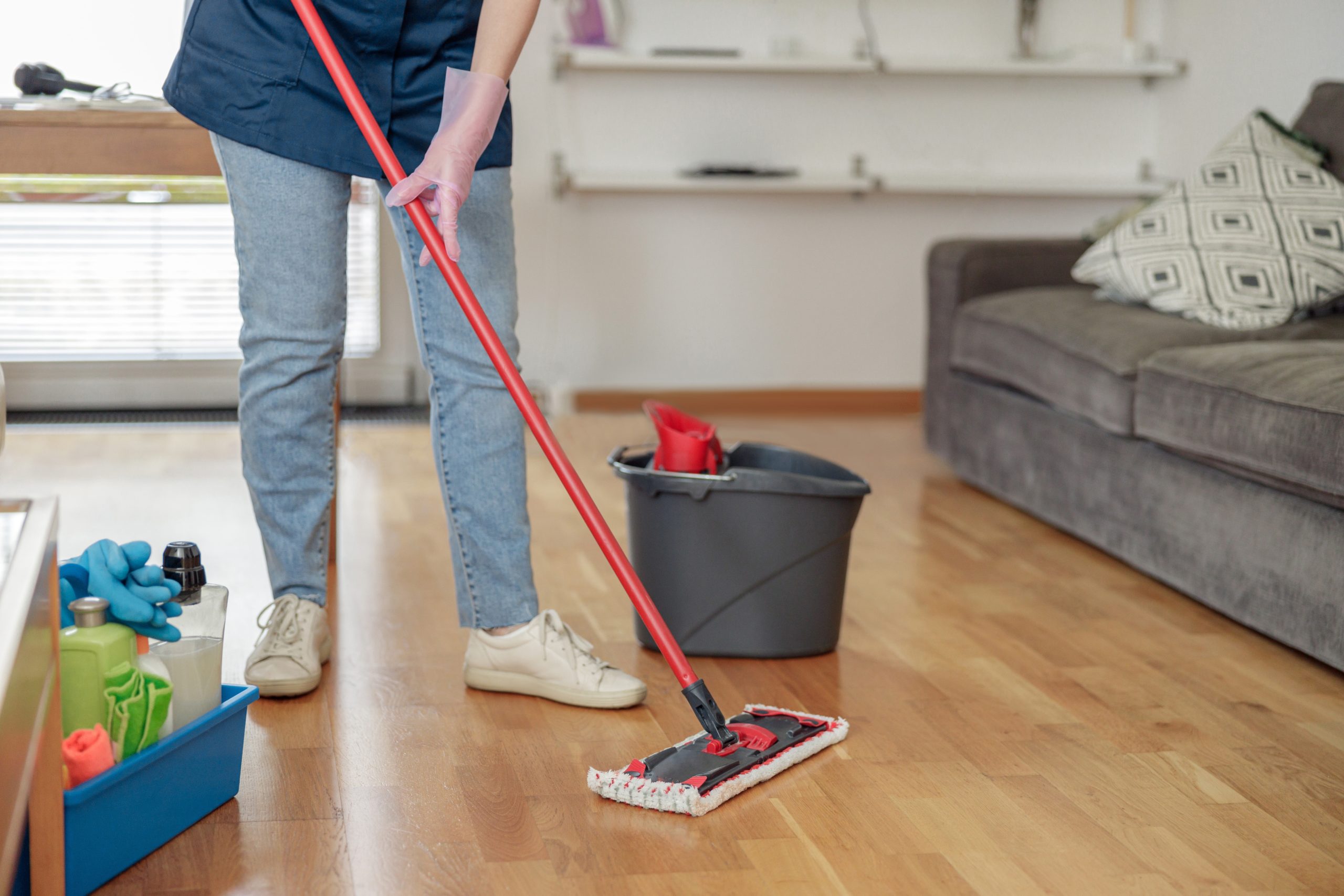
- Vacuum or dust-mop thoroughly.
- Pre-spray a dedicated wood-floor cleaner (pH-neutral, no polish additives) onto the pad, not the floor.
- Mop in lanes, following the grain, overlapping slightly.
- Flip or change the pad once it looks grey; a dirty pad redeposits grime.
- Dry buff with a fresh, dry microfibre for that crisp finish.
If you still see streaks, reduce the concentration slightly, switch to filtered water, or swap to a higher-quality pad.
Maintenance moments that reset everything
Even perfect cleaning can’t fix worn finish. When scuffs stay visible after mopping or the sheen looks mottled, it’s time for light professional intervention. We can micro-abrade and top up your lacquer, or deep-clean and care-oil an oiled floor. If boards are moving and gaps collect dust, elastic Gap Filling stops the “grey line” effect. Broken blocks, cupping, or water damage? Our Repairing team blends in replacements so the eye never catches a patch.
For major refreshes, a full Refinishing cycle—Wood Floor Sanding, Staining if desired, and Lacquering or Oiling—returns that just-installed clarity and makes day-to-day cleaning almost effortless.
The mindset shift that keeps floors stunning
Think of cleaning not as “adding shine” but as removing anything that interrupts light. Dust, residues, and micro-scratches all scatter light and steal the crispness you crave. Choose products that vanish, methods that minimise water, and maintenance that resets the surface before damage reaches the wood. Do that, and your floors will keep that magazine-worthy clarity without gimmicks or heavy scents.
In short, the look people associate with The “Show Home” Clean is about invisible chemistry, good tools, and the right routine—not layers of temporary gloss.
FAQs
Will distilled white vinegar make my floors streak-free?
It may at first, but acids can dull lacquer over time and aren’t ideal for oil. Stick to pH-neutral.
Why do my footprints show after mopping?
Residual surfactant or too much product is the usual cause. Reduce dilution and dry buff with a clean pad.
Do I need to rinse?
With true low-residue cleaners used at the right dilution, no rinse is needed. If you see suds, you’ve used too much.
How often should I get professional maintenance?
Light domestic spaces: every 18–36 months. Busy households or commercial spaces: annually, sometimes biannually. Our Refinishing and Commercial Sanding programmes keep disruption minimal.
Ready to reset? We can help
If haze won’t shift, if past polishes have built up, or if you’re ready for a floor that’s easy to keep immaculate, we’ll get you there. From precision Wood Floor Sanding and tone-correct Staining to durable Lacquering or nourished Oiling, we plan the finish around your lifestyle. Add smart Gap Filling, discreet Repairing, and curated aftercare—and your cleaning routine stays quick, simple, and gloriously film-free.
Because the real secret behind The “Show Home” Clean isn’t a miracle spray. It’s the right finish, the right products, and a routine designed to leave nothing behind but light.